Pixel Gun 3D - FPS Shooter
- 4.2
- Rating
- 100.00M
- Installs
- Free
- Price

 Analysis by App-foxy
I first approached Pixel Gun 3D - FPS Shooter expecting a quick blocky shooting game, but its appeal became clearer after several short sessions. The game gets you into action quickly, gives immediate feedback when a shot connects, and then offers enough variety to make another round feel tempting. That rhythm is the real reason it works: act, react, earn something, reset, and decide whether to play again.
Developed by Pixel Gun 3D, this free action game is aimed at players who enjoy fast shooting rather than slow tactical planning. It combines online multiplayer with offline play, so it can fit both a competitive mood and a situation where I simply want something playable without Wi-Fi. The Teen content rating is worth keeping in mind, especially if the game is being considered for a younger player.
The scale of the audience is easy to understand when I look at how established it has become: it has passed 100 million installs, with an average rating of 4.2. Those figures do not guarantee that every player will enjoy it, but they do reflect a game with a long-running community and a familiar place in mobile action gaming.
You May Also Like

 Pandora - Music & Podcasts
Pandora’s Music Is Easy to Start, but Harder to Recover
Pandora’s strength is its low-effort path from a seed to a station. Its weak spot is how much confidence it asks you to place in connection, setup, and quiet recovery.

 AccuWeather: Weather Radar
AccuWeather Review: A Quick, Clear Forecast for Everyday Decisions
For everyday plans, the best forecast is the one you can understand quickly. AccuWeather makes rain timing, radar, and local conditions easy to act on, with a few trade-offs.

 Hill Climb Racing
Why Hill Climb Racing Still Turns Crashes Into One More Run
A tiny car, a bumpy hill and one more upgrade: Hill Climb Racing keeps resurfacing because its simple chaos makes every near-miss feel personal.

 AliExpress - Shopping App
AliExpress Makes Global Shopping Feel Personal, but Shoppers Bear the Risk
AliExpress turns a global marketplace into a pocket-sized discovery engine. Its reach is useful, its shopping loop compelling, and its trade-offs easy to miss.

 Lords Mobile: Kingdom Wars
Lords Mobile Is a Kingdom-Building Routine, Not a Quick Match
A case-by-case verdict on the building, battles, device demands, and social commitments that make Lords Mobile rewarding for some players and exhausting for others.

 PDF Scanner app - TapScanner
TapScanner Makes Paperwork Easier to Capture, Check, and Share
TapScanner makes scanning with a phone feel less like a rescue operation and more like a dependable step in getting work done. Its capture tools are useful, though not flawless.
More From Our News Desk
View All News


From the first shot to the next match
I like that the first match gets to the point, but a quick start does not mean every part of the experience is immediately clear. I’d give myself a little time to settle into the touch controls before judging how well I’m playing, then use each match to notice one thing I want to adjust. That makes the next round feel like a deliberate choice rather than an automatic replay.
The first action is deliberately immediate
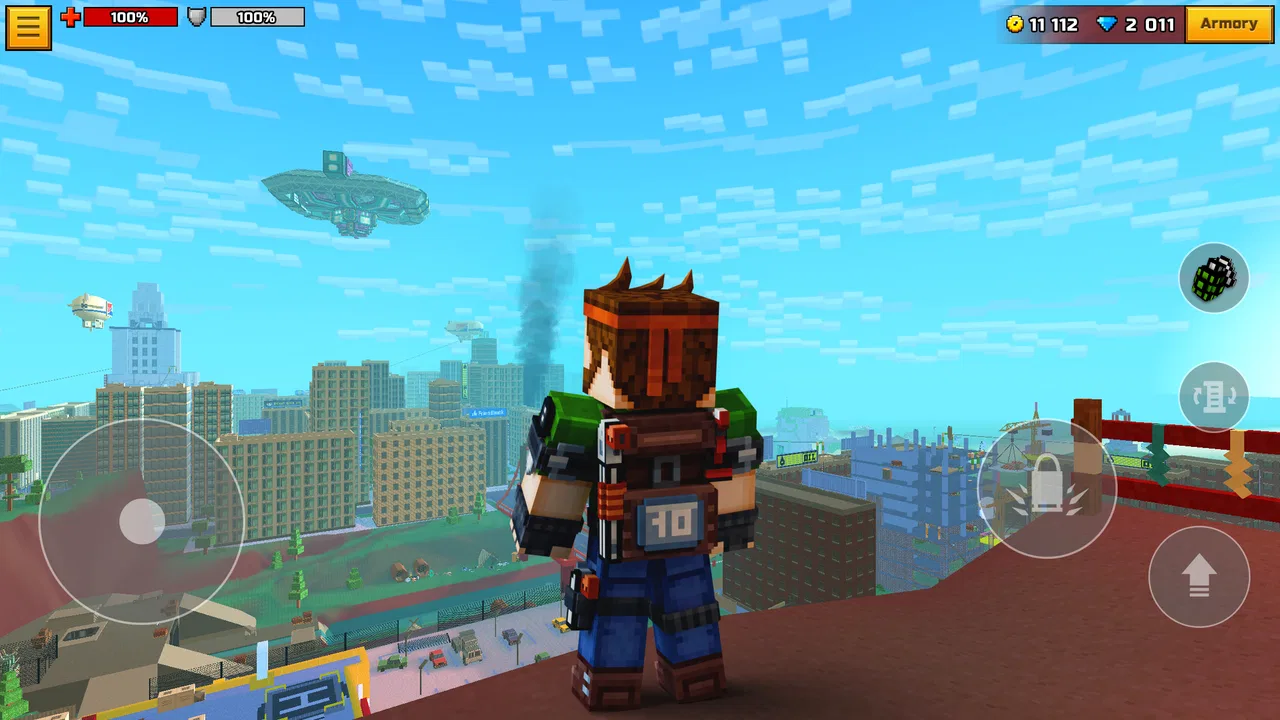
The strongest part of the opening experience is that I do not need a long explanation before understanding the basic pleasure. I move, aim, fire, and watch the result appear almost instantly. The pixel-art presentation makes the action feel playful instead of grim, while the shooting still has enough impact to make accuracy matter.
That immediate start is especially useful on a phone. I can pick it up during a short break, play a round, and put it down without needing to remember a complicated story or a large map. At the same time, the simple appearance should not be mistaken for a completely shallow experience. Once opponents move unpredictably and the arena becomes busy, positioning and timing become more important than the first few minutes suggest.
I found touch controls most comfortable when I treated the screen as a space that needed deliberate organization. Random swipes and frantic firing may work against inexperienced opponents, but they quickly become unreliable when a match gets crowded. Keeping movement and aiming consistent is more valuable than trying to perform dramatic turns every second.
This is one place where the game differs from slower console-style shooters adapted to mobile. Pixel Gun 3D feels designed around short reactions and visual clarity rather than realism. If I want a military simulation with weighty movement, careful reload management, and a restrained visual style, this is not the right choice. If I want a colorful shooter that communicates its action quickly, the format makes much more sense.
Feedback keeps every exchange readable
The feedback rhythm is built around visible consequences. A successful attack feels different from firing into empty space, and an unexpected defeat gives me an immediate reason to rethink what I was doing. That clarity matters because mobile matches can become chaotic. Without a clear response to each decision, fast action would feel like tapping randomly.
I particularly like the way the blocky style supports recognition. Characters, weapons, and environments have a deliberately toy-like appearance, which helps the game maintain its identity. It is not trying to compete with photorealistic shooters. Instead, it uses exaggerated shapes and bright presentation to make the battlefield easier to read at a glance.
There is still a learning curve. Players who are new to touch-screen shooters may initially spend too much attention on aiming and not enough on movement. A useful habit is to practice keeping the camera under control while moving through open areas, rather than waiting until an opponent appears. That small adjustment makes the first moments of a fight less frantic.
Another practical tip is to avoid treating every encounter as a direct duel. In a fast mobile shooter, taking a better angle can be more useful than chasing an opponent into an exposed position. I had more consistent matches when I paused briefly to understand where pressure was coming from instead of firing continuously whenever something moved on screen.
Why the reward feels connected to the action
The reward stage is what turns isolated matches into a longer routine. Finishing a round gives the session a sense of progress, even when the result is not perfect. I am not only asking whether I won; I am also thinking about what I can improve before the next attempt and what the game will let me work toward over time.
That structure suits players who like gradual improvement. The satisfaction comes from several small sources: learning a route, responding faster, making fewer careless attacks, and becoming more comfortable with the controls. The game does not need every match to end in a victory for the session to feel worthwhile.
However, the free-to-play design affects how I view rewards. Optional purchases range from $0.99 to $109.99 per item, so anyone who enjoys collecting or accelerating progress should decide on a spending limit before becoming invested. I prefer treating purchases as unnecessary extras rather than part of the basic admission price. That mindset helps keep the action itself at the center.
This is also where the game may frustrate players who want a completely even progression path. Competitive-minded users may be more sensitive to any advantage associated with spending, while casual players may care less and simply enjoy the visual variety. My recommendation is to play for a while without buying anything and judge whether the normal loop already feels satisfying. If it does not, spending more is unlikely to solve the underlying issue.
Offline play changes the everyday use case
The offline PvE option is one of the most useful parts of the package for ordinary daily situations. I can imagine playing it on a commute with unreliable connectivity, during a flight, or in a waiting room where online multiplayer is impractical. It gives the game a second purpose beyond competing against other people.
Offline play also provides a lower-pressure place to become familiar with the shooting feel. Instead of immediately worrying about human opponents, I can concentrate on movement, aiming, and the way different encounters unfold. That makes it a sensible starting point for someone who has not played many mobile shooters.
The trade-off is that offline action cannot provide the same unpredictability as a live opponent. Once I understand the patterns, the challenge may feel more manageable than online matches. I see it as practice and convenient entertainment rather than a full replacement for multiplayer competition.
For a realistic everyday scenario, I would use the offline mode when I have ten minutes and no dependable connection, then switch to online play later when I want a more demanding test. That division gives each mode a clear role instead of expecting one to do everything.
Online matches create the strongest replay pull
The online side is where the core loop becomes most compelling. The game includes eleven online multiplayer PvP modes, which gives the competitive portion more room than a single repeated match type. I appreciate that variety because the best mode for a quick warm-up is not always the best one when I want a tense, longer session.
Different modes also change the way I think about success. In one match, accurate shooting may be the priority; in another, movement, survival, or awareness can matter more. That variation prevents the controls from feeling completely solved after a few rounds.
Still, online play is not automatically better for every player. It can be more stressful, and a poor run may lead to repeated attempts driven by irritation rather than enjoyment. I have found it useful to stop after a match where I am clearly playing impatiently. The reset works best when I choose to begin again, not when I feel pushed into proving something.
Players who prefer thoughtful single-player campaigns should probably look elsewhere. The offline component is convenient, but the lasting identity of this game comes from shooting matches, not from a carefully written narrative. Likewise, anyone seeking a calm puzzle game or a gentle creative sandbox will find the constant action tiring rather than relaxing.
The reset is part of the design, not a failure
Every match eventually ends, and that reset is what makes the next session possible. A defeat does not erase the time I spent learning, while a victory does not permanently solve the game. I return because there is another situation to read, another mistake to avoid, or another mode to try.
This reset is particularly effective in short sessions. I do not need to reserve an entire evening to feel that I have played enough. One round can be a complete visit, while several rounds create a longer competitive session. That flexibility is a major reason I would recommend it to people who play primarily on their phones.
There is a downside to this structure: the same quick reset can encourage mindless repetition. If I keep starting another match without changing my approach, I am only repeating the same frustration. A better routine is to choose one small focus for the next round, such as staying mobile, checking surroundings before attacking, or avoiding unnecessary exposure.
That approach turns the reset into a useful checkpoint. Instead of asking only whether the last match was good, I ask what the result revealed. It is a simple habit, but it makes the game feel more skill-based and less dependent on luck or reflexes alone.
Version, access, and who should install it
The current version is 26.8.0, and the game supports devices running Android 7.0 or later. It is free to download, which makes trying the basic experience straightforward. I would still check the device's available storage and general performance before committing to long sessions, because fast action is much less enjoyable when a phone struggles with it.
The game is a good fit for someone who wants a colorful mobile FPS with both online and offline options, enjoys short repeatable matches, and likes improving through practice. It is also a reasonable choice for players who find realistic shooters too serious but still want aiming, movement, and competition.
I would skip it if I dislike touch controls, become easily annoyed by competitive losses, or want a purchase that removes all free-to-play pressure. I would also choose a different type of game if my priority is a deep story or a slow, methodical campaign. Pixel Gun 3D is strongest when I accept its arcade-like pace and treat each match as a compact challenge.
My verdict on the complete loop
What keeps me returning is not one isolated feature. It is the sequence: the first shot is immediate, the feedback is easy to understand, the reward gives the match a purpose, and the reset makes another attempt feel natural. The loop is simple enough for a short break but flexible enough to support longer online sessions.
The game also benefits from having two distinct situations covered. Online PvP supplies unpredictability and competition, while offline PvE gives me something to do when a connection is unavailable or when I want to practice without pressure. That combination is more useful in daily life than an online-only shooter, even though multiplayer remains the more exciting side.
My main caution concerns the free-to-play economy and the possibility of repetitive play. I would not install it expecting every session to feel fresh or every progression step to feel equally satisfying. I would install it because the shooting is quick to understand, the pixel presentation is distinctive, and the match-to-match reset makes it easy to fit into spare moments.
With around 5.8 million ratings and roughly 593 thousand written reviews, it is clearly not an obscure experiment. More importantly, my own experience explains why it has lasted: it gives mobile players an accessible action loop without requiring a large time commitment. My recommendation is positive for casual and competitive shooter fans who want variety, offline access, and fast rounds, but cautious for anyone who dislikes in-app purchases or needs a substantial single-player story.
FAQs for Pixel Gun 3D - FPS Shooter
01What is Pixel Gun 3D - FPS Shooter about?
Pixel Gun 3D is a first-person shooter game that combines action-packed shooting with engaging multiplayer modes. Players can enjoy various game modes like Battle Royale, Co-op Survival, and Campaign. The game offers a pixelated art style, reminiscent of retro games, providing both nostalgia and modern gameplay excitement.
02Is Pixel Gun 3D free to play?
Yes, Pixel Gun 3D is free to download and play. However, it does include in-app purchases that can enhance the gaming experience. These purchases can include additional weapons, skins, and other items. Players can choose to make these purchases to progress faster or personalize their gaming experience.
03What are the system requirements for Pixel Gun 3D?
Pixel Gun 3D is available on both Android and iOS platforms. For Android, it typically requires version 4.1 and up. For iOS, it usually requires iOS 9.0 or later. It's advisable to have a device with decent RAM and processing power to ensure smooth gameplay, especially during intense multiplayer sessions.
04Does Pixel Gun 3D support multiplayer modes?
Absolutely! Pixel Gun 3D is well-known for its robust multiplayer features. Players can engage in team battles, competitive modes, and even participate in massive Battle Royale matches. The game also allows players to create clans and compete in clan wars, fostering a strong community aspect.
05Is there a way to play Pixel Gun 3D offline?
Yes, Pixel Gun 3D offers an offline mode where players can enjoy the Campaign and some other single-player modes. While the full multiplayer experience requires an internet connection, offline modes are perfect for practicing skills and exploring the game’s mechanics without connectivity.
Pros
- Engaging multiplayer modes.
- Vast array of weapons.
- Regular updates and events.
- Colorful
- blocky graphics.
- User-friendly controls.
Cons
- In-app purchases can be pricey.
- Some ads are intrusive.
- Occasional lag in gameplay.
- Limited solo content.
- Battery drain on older devices.

Pixel Gun 3D - FPS Shooter
Gallery